Against the backdrop of global energy structure transformation, the photovoltaic industry is gradually becoming an important pillar of the green energy industry. The photovoltaic module production line is an important link in the photovoltaic industry, and the equipment and technology used in its production process have a crucial impact on the quality, cost, and production efficiency of photovoltaic modules.
The specific process flow of photovoltaic module manufacturing can be divided into:
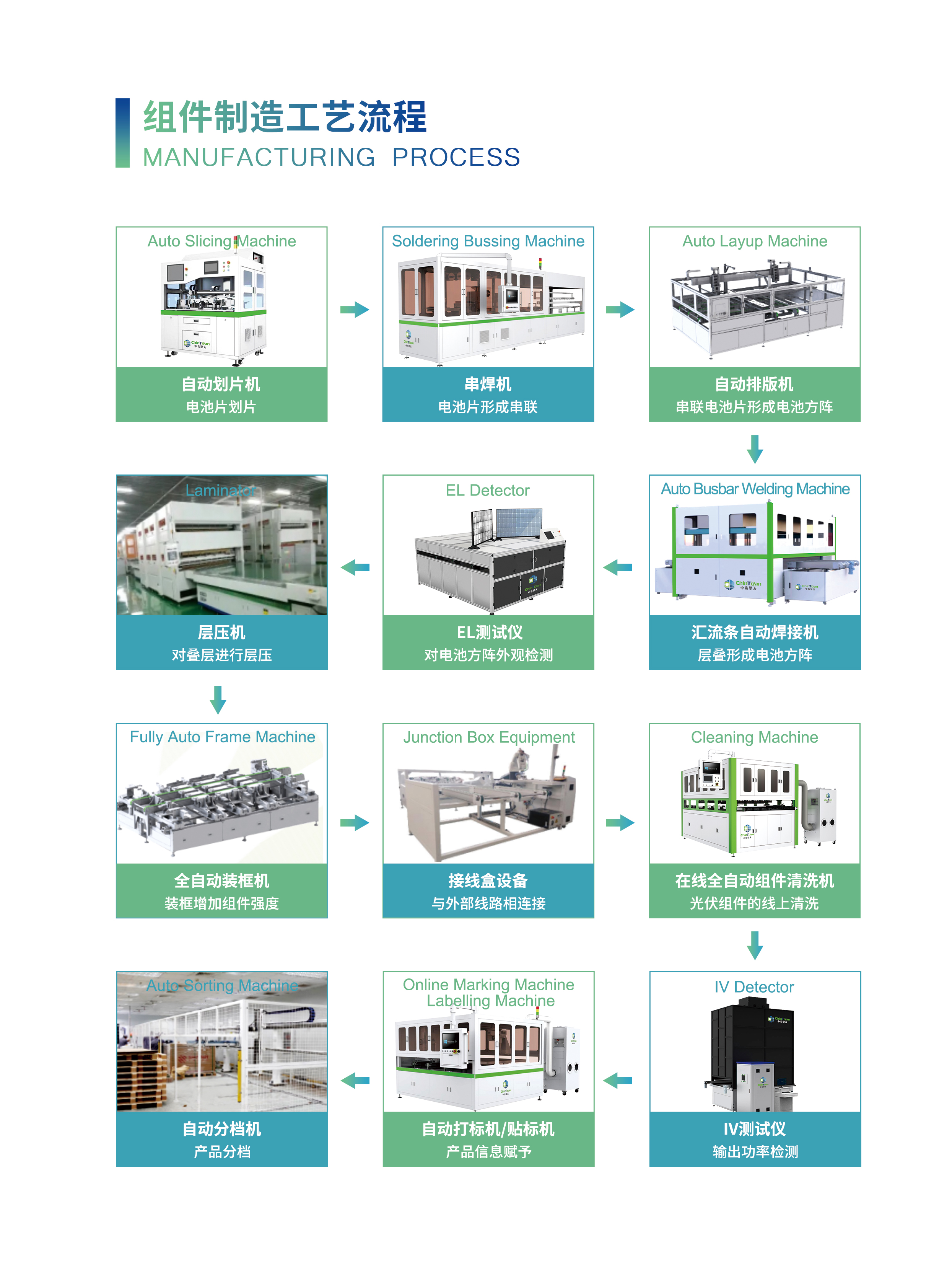
The equipment involved in the manufacturing process mainly includes: cutting machines, string welding machines, layout busbar welding machines, laminating machines, EL testers, and IV testers.
1. Cutting machine
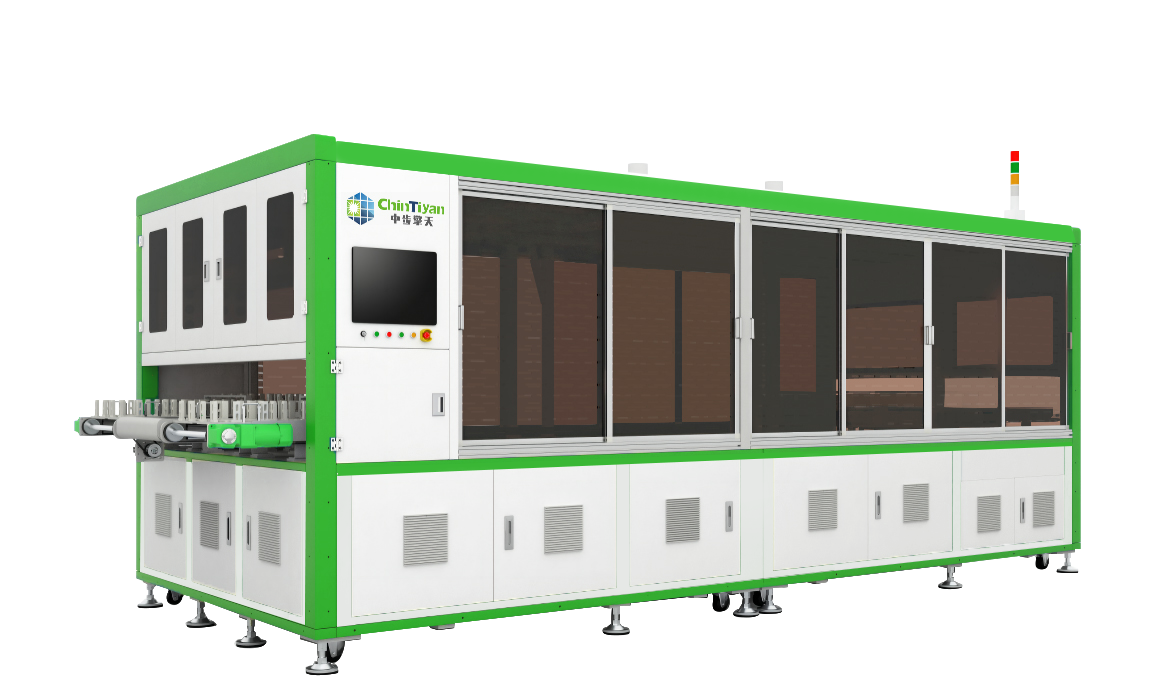
Definition: A cutting machine, as a front-end precision CNC equipment for photovoltaic module production, is specifically designed for precise cutting of solar cells.
Working principle: High energy laser beam is used, and after being focused by a dedicated optical system, non-contact processing is carried out on the surface of the battery cell. Precise cutting is achieved through local melting and gasification to avoid damage caused by mechanical stress.
Equipment example: For example, CTC-80S, a high-speed laser non-destructive cutting machine developed by Zhongbu Qingtian, integrates modules such as loading, positioning, laser cutting, and unloading to achieve efficient and precise operations.
String welding machine
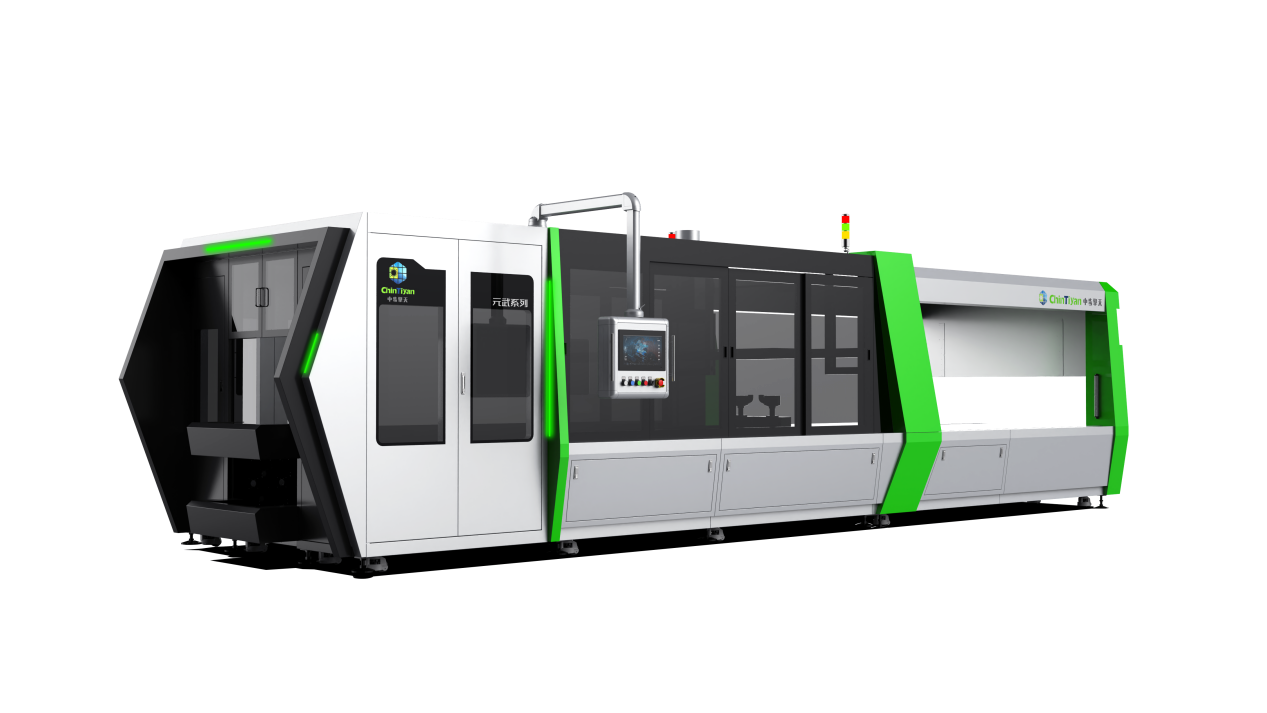
Definition: The string welding machine is one of the core equipment in the photovoltaic module production line, responsible for connecting low-voltage solar cells in series or parallel to meet practical application needs.
Function: Connect or parallelize battery cells with a single voltage of approximately 0.5V. Typically, each component contains 60 or 72 battery cells, with 10-12 cells welded in series.
Equipment structure: Taking the Zhongbu Qingtian High speed BC string welding machine CTM-60BC as an example, it includes a comprehensive automation mechanism for feeding, positioning, welding strip processing, welding, film coating, and unloading.
Layout busbar welding machine
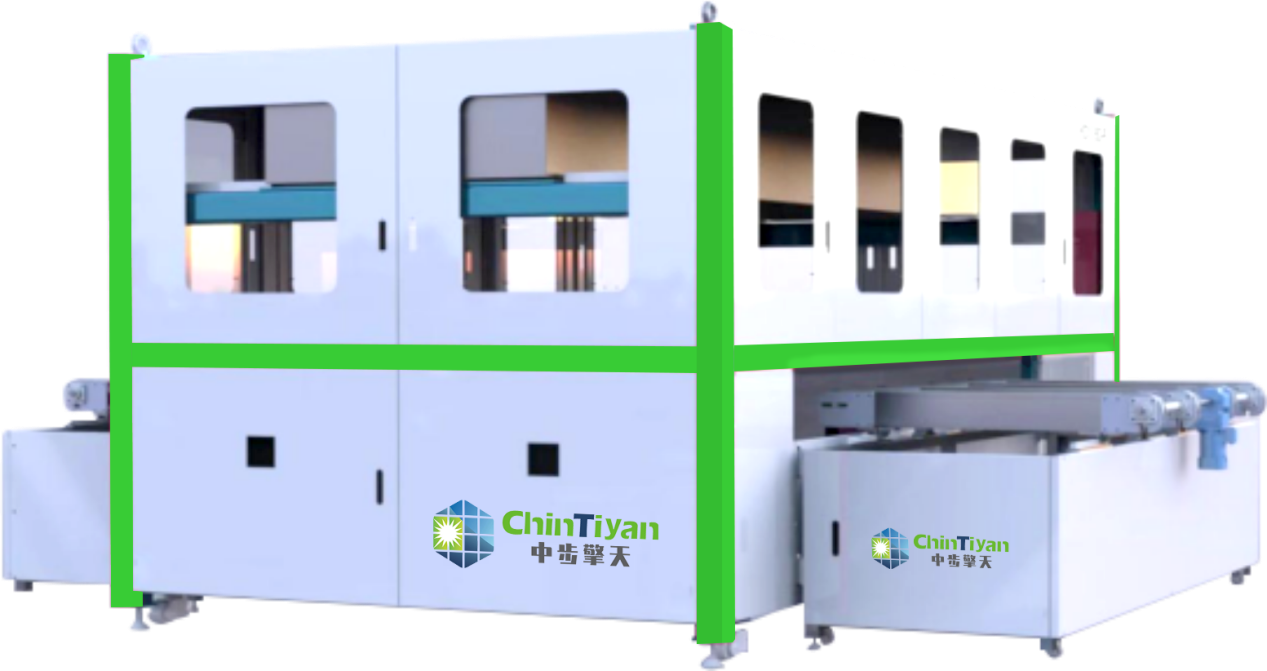
Definition: The layout busbar welding machine is specifically used for the layout and welding of welding strips and busbars in photovoltaic modules, ensuring effective current collection.
Function: Arrange welding strips on the surface of battery cells and connect the bus bar to the welding strips through welding to form a current path.
Equipment composition: such as CT-J-HLH-00, which integrates modules such as feeding, typesetting, cutting busbars, welding, transmission welding stations, and frames.
Laminator
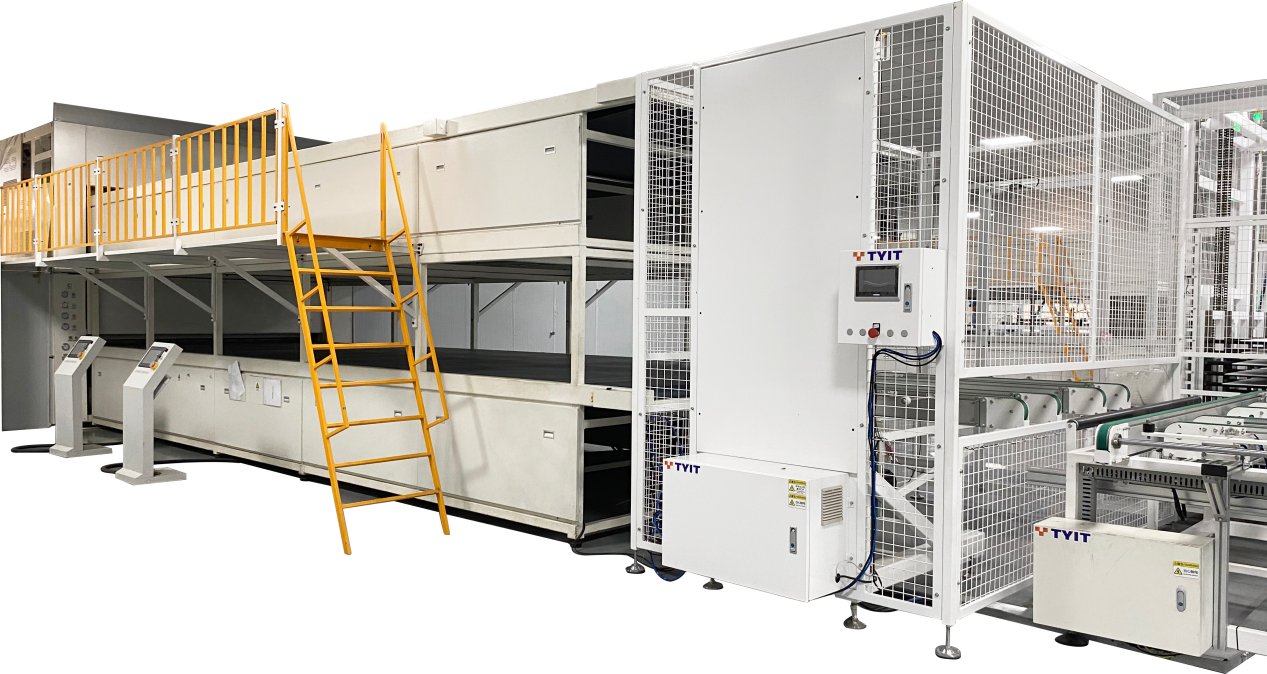
Definition: A laminating machine is an advanced equipment that integrates vacuum, pneumatic transmission, and PID temperature control, specifically designed for the lamination production of monocrystalline silicon and polycrystalline silicon battery components.
Working principle: By vacuum extracting air from the components, heating melts EVA, tightly adheres the battery cells, glass, and backplate, and then cools and solidifies to form.
System composition: Taking the CT-2787-DTT double-layer double chamber laminating machine from Zhongbu Qingtian as an example, it consists of four key parts: heating, vacuum, pneumatic, and control systems.
EL tester
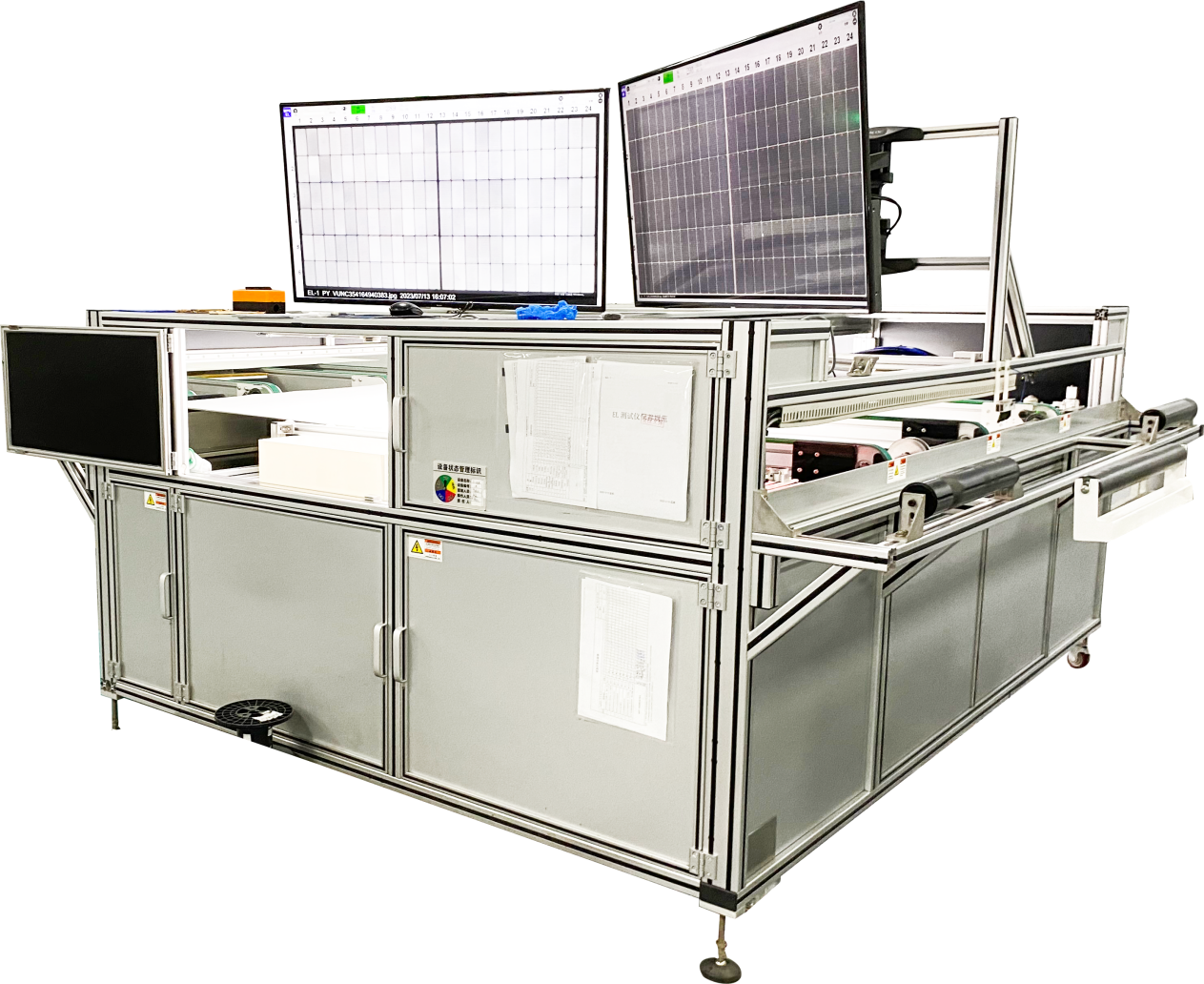
Definition: EL tester is a high-precision internal defect detection device used to detect various hidden problems of solar cell modules.
Function: Detect defects such as hidden cracks, fragments, virtual soldering, black chips, broken grids, as well as abnormalities in single cells with different efficiencies, suitable for production and on-site inspection in power plants.
Working principle: Use a high-resolution infrared camera to capture near-infrared images of components, and determine defects through image analysis.
Equipment advantages: For example, the Zhongbu Qingtian online EL appearance all-in-one machine has the advantages of high sensitivity, fast detection, and intuitive result display.
IV tester
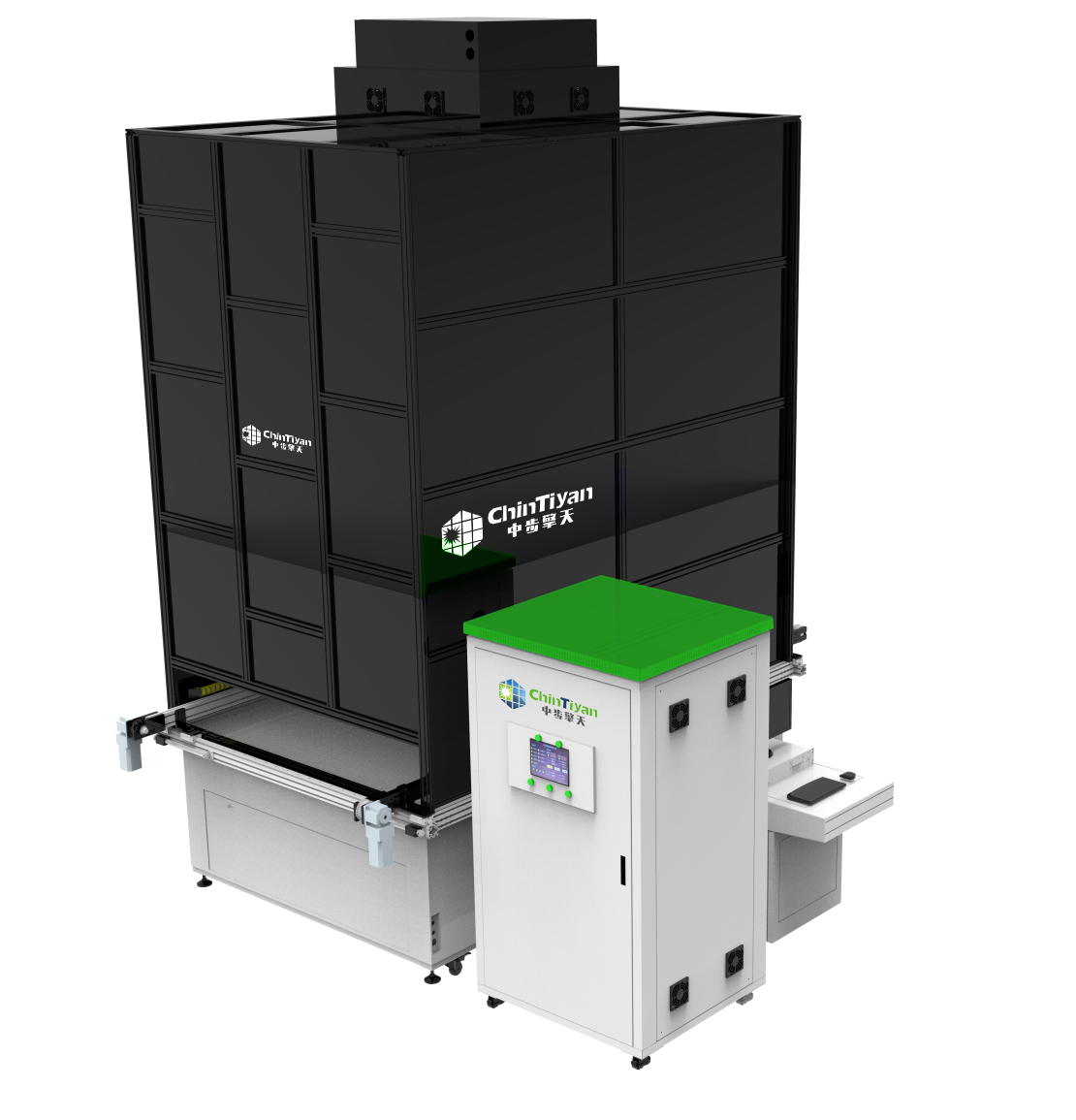
Definition: IV curve tester, focusing on performance testing of photovoltaic systems, especially for in-depth analysis of power loss and component matching.
Function: Test the electrical performance of photovoltaic modules at different temperatures and irradiance, including power, open circuit voltage, short-circuit current, etc., and convert it into data under standard conditions for comparison.
Application: Through IV curve analysis, diagnose problems such as stains, dust obstruction, component degradation, and series mismatch, providing a basis for system optimization.
Equipment advantages: For example, the CT-1000 high-efficiency solar module IV tester from Zhongbu Qingtian has the advantages of top-level light source, full spectrum coverage, high-speed data acquisition, flexible adjustment of light speed, and full range size adaptation.
With the continuous advancement of photovoltaic technology and the sustained growth of global demand for clean energy, the production process and equipment of photovoltaic modules will also continue to innovate and upgrade. We have reason to believe that, driven by technology, the photovoltaic industry will usher in even broader development prospects.
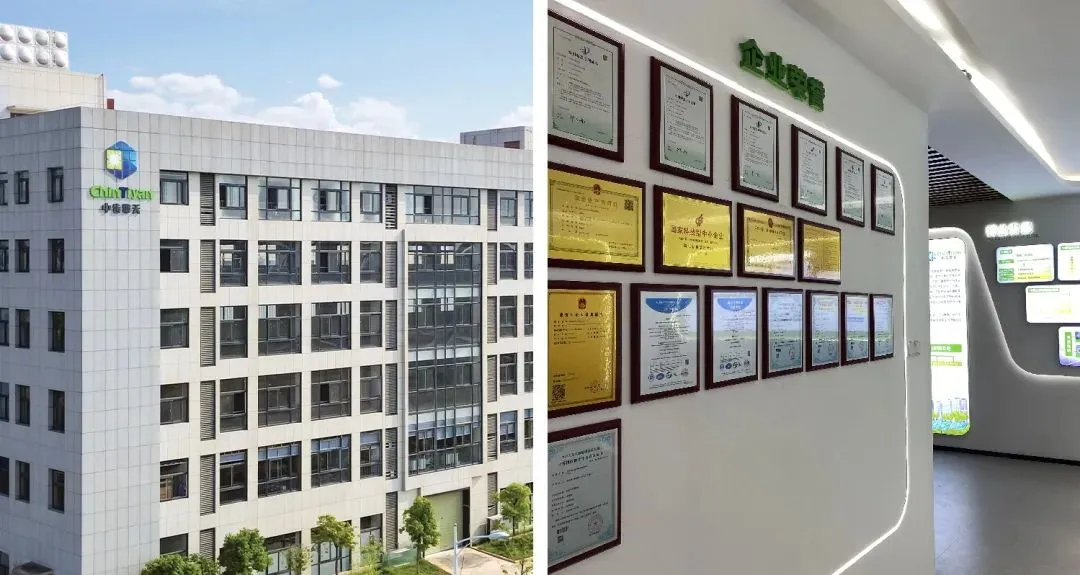
Zhongbu Qingtian New Energy is a high-tech enterprise in the new energy industry. The company's main business is the research and production of photovoltaic module equipment (high and low speed cutting machines, string welding machines, etc.), as well as turnkey services for photovoltaic module automation production lines. The company relies on strong technical support and talent support from academic institutions such as Wuhan University and Hubei University of Technology, and has gathered a senior R&D team of more than 60 people. It has obtained more than 10 important patents and has established a 10000 square meter production base in Wuhan, Hubei, Changzhou, Jiangsu and other places. It has independently developed multiple equipment including BC high-speed string welding machines, low-speed BC string welding machines, fully automatic double track string welding machines, high-speed laser cutting machines, layout fusion welding, conventional laser cutting machines, online frame marking machines, etc., which have been widely praised.